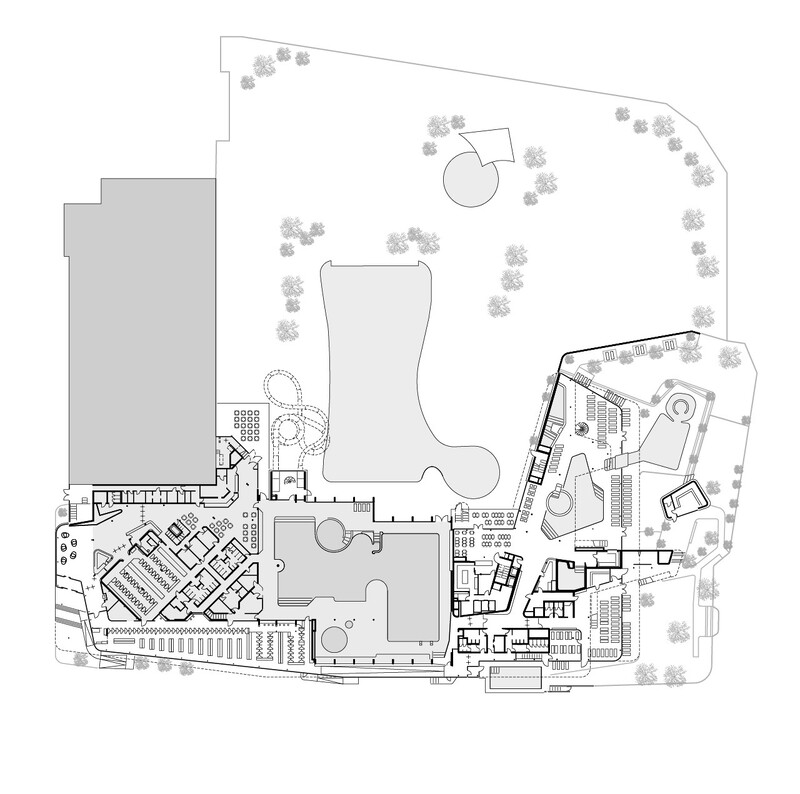
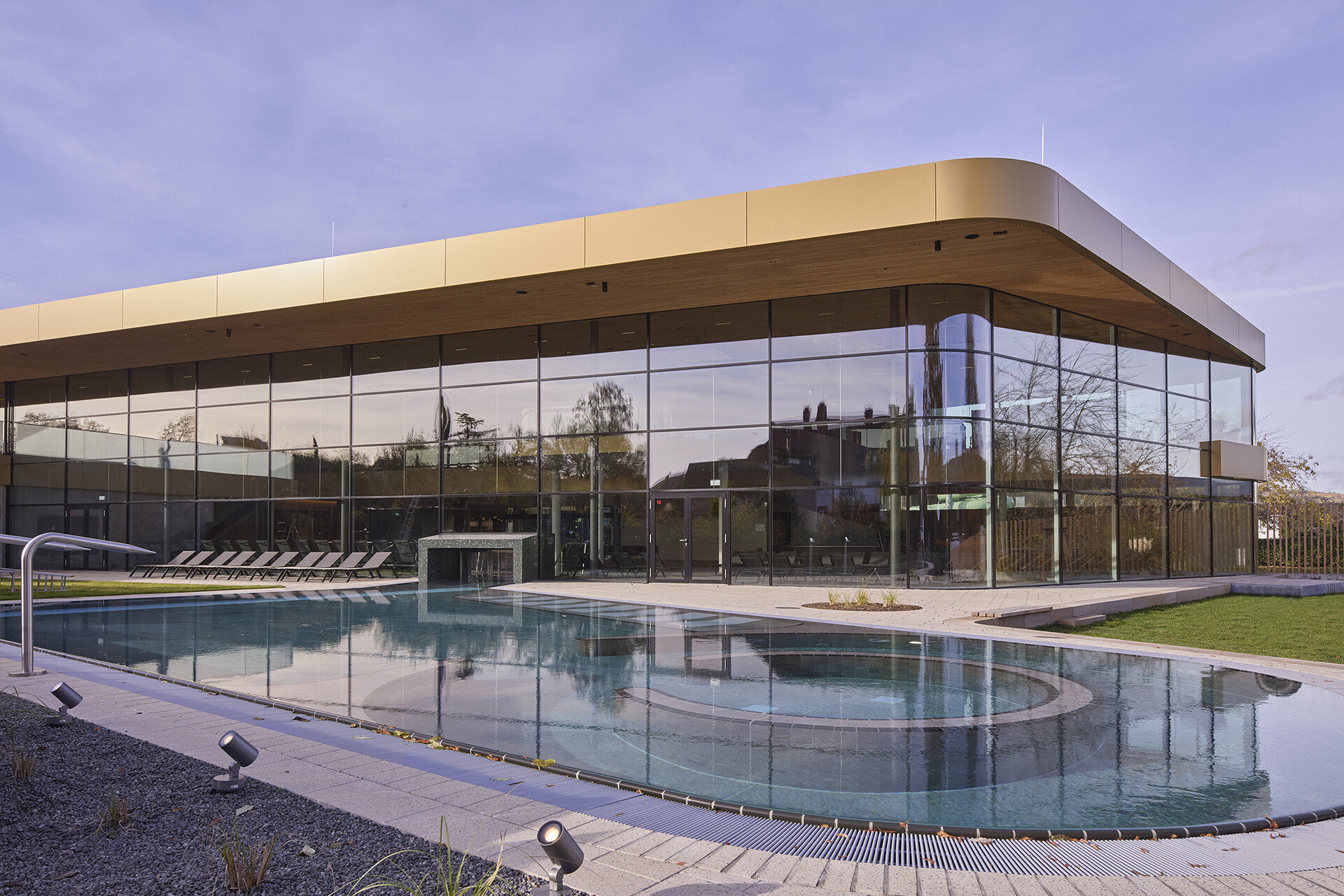
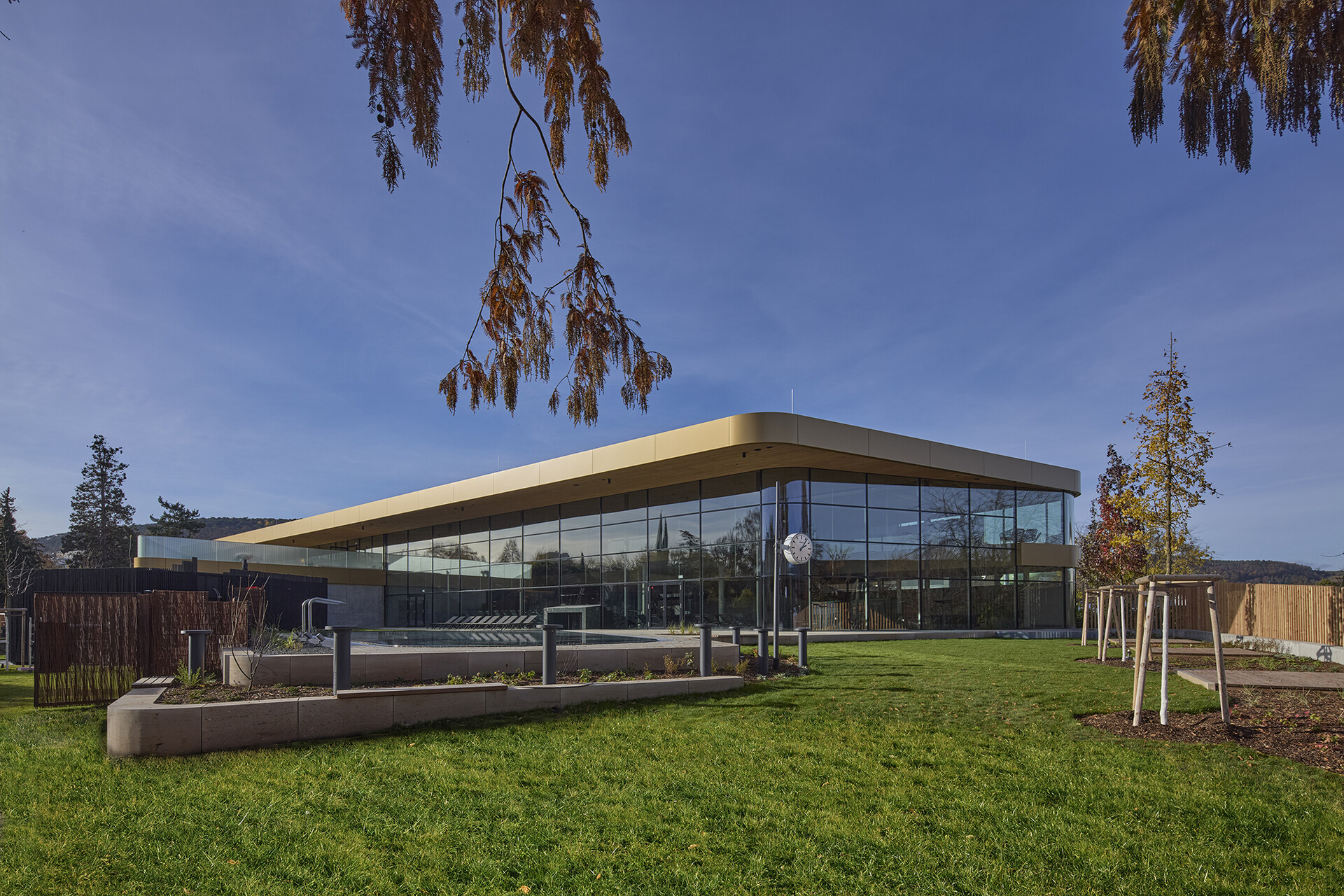
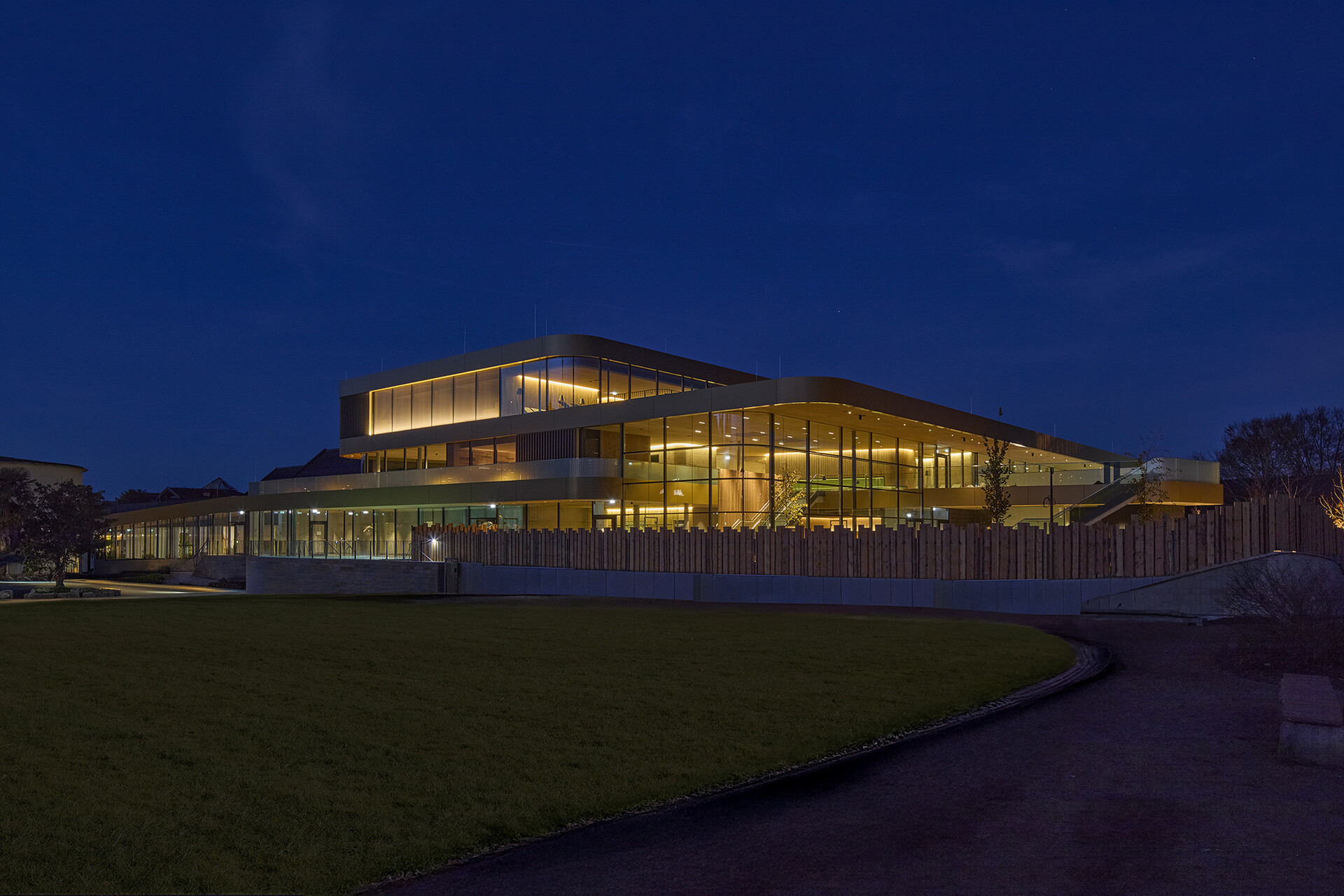
The Salinarium is located close to the spa park in the centre of Bad Dürkheim. By adding a new thermal spa and sauna area to the existing leisure pool, 4a Architekten have carefully developed and architecturally redefined the complex. The aim was to integrate the new building sensitively into the existing structures of the spa park as well as the indoor and outdoor pools, significantly upgrading the overall appearance of the Salinarium without interrupting ongoing operations.
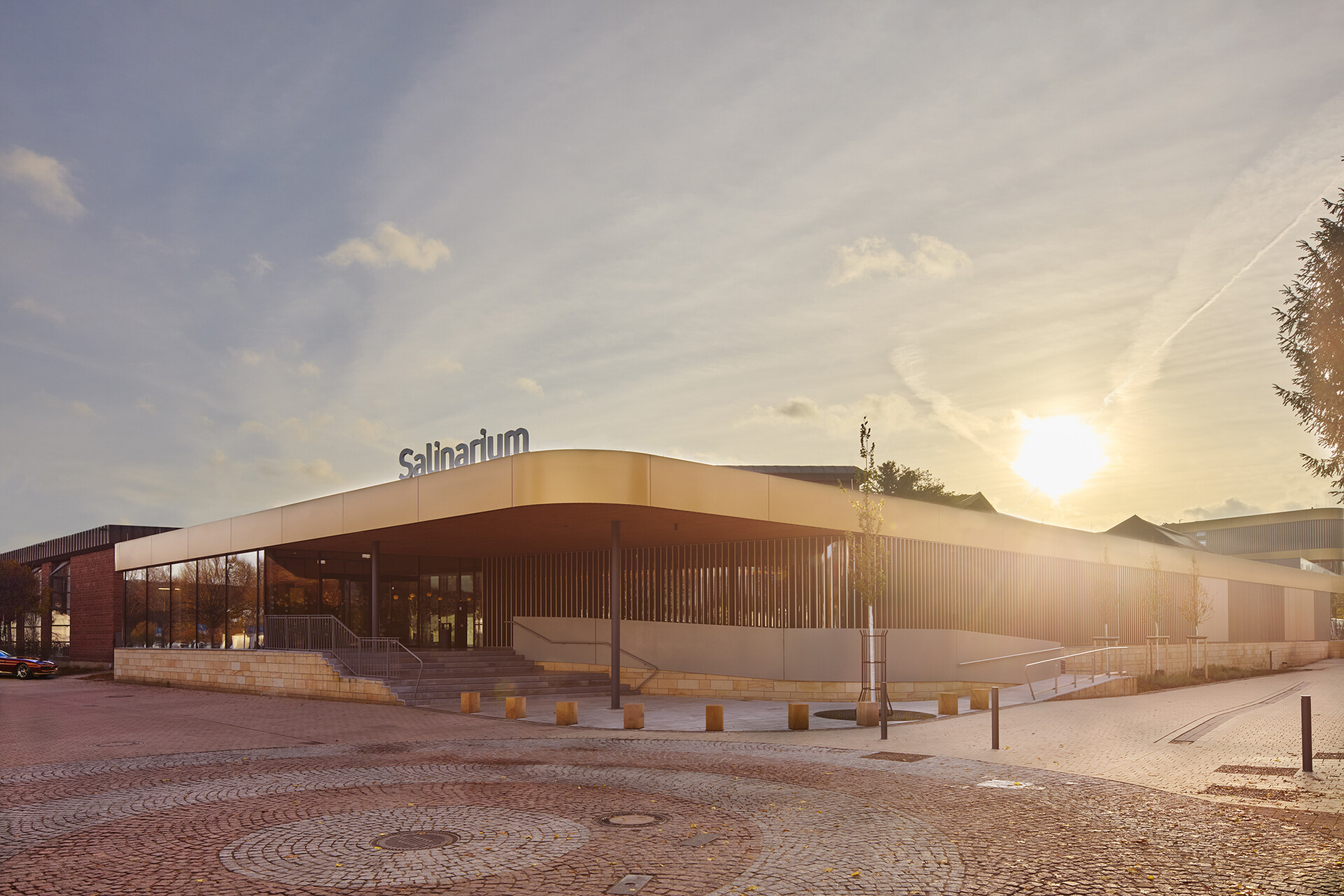
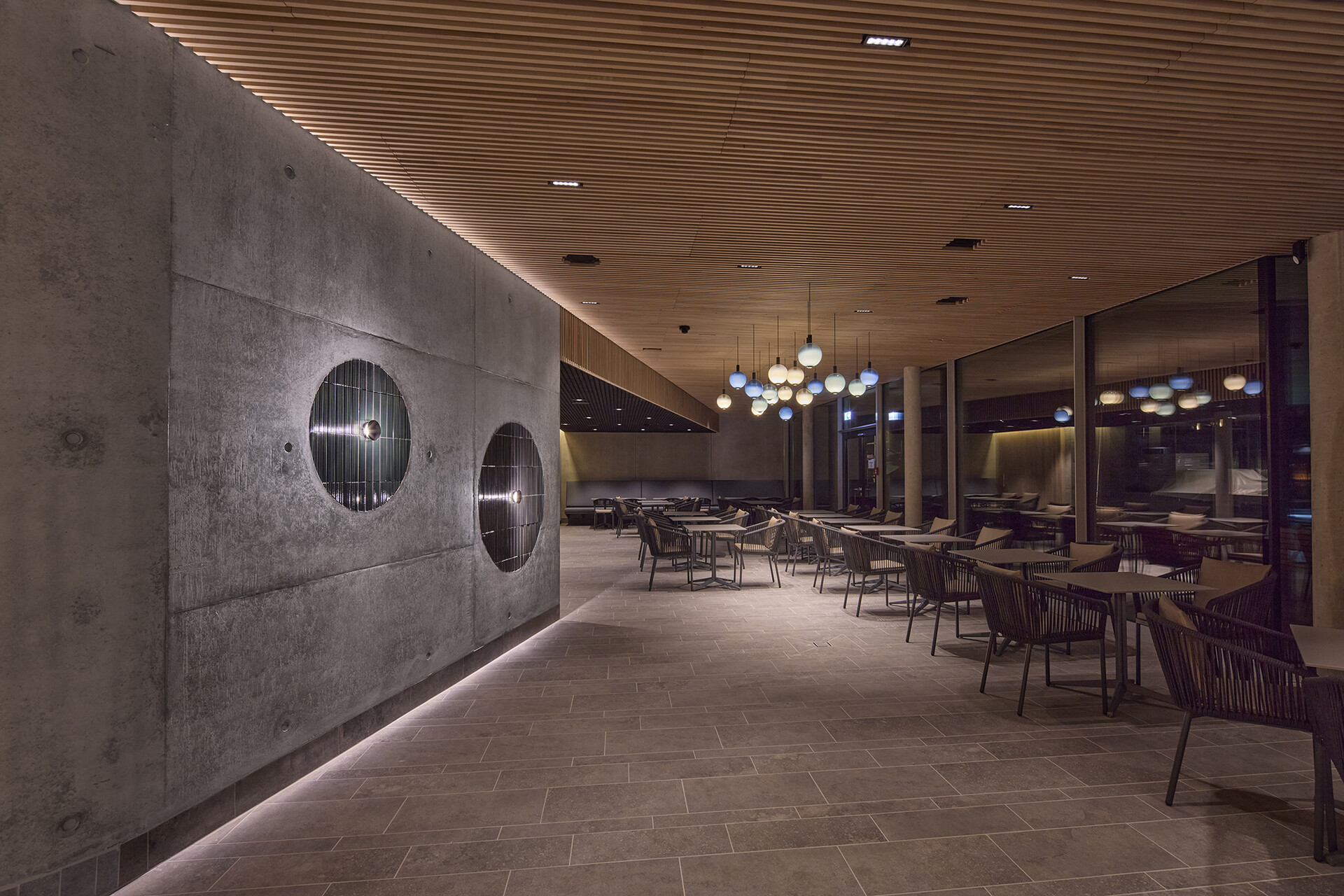
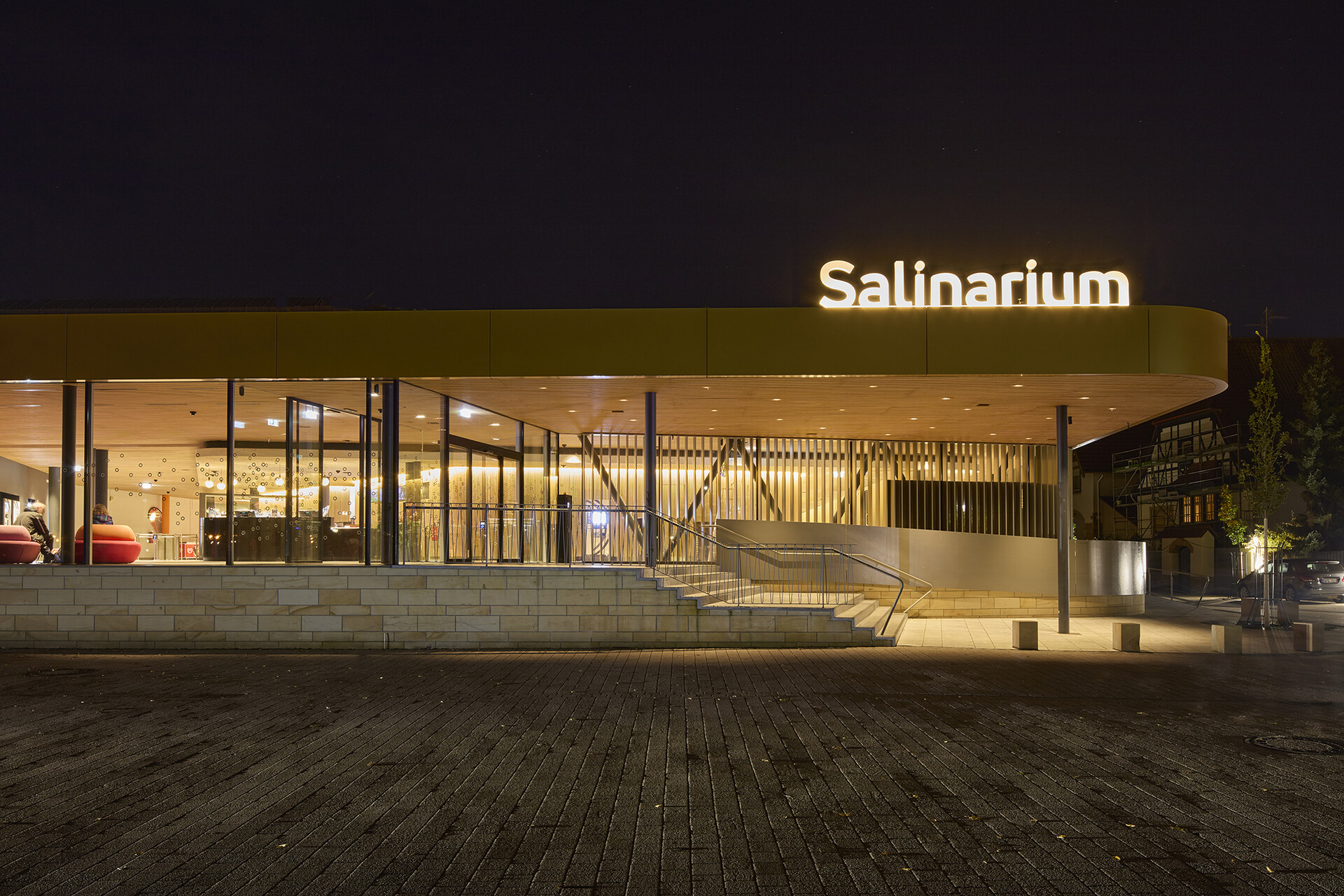
The architectural introduction is marked by a newly designed entrance area with a wide cantilevered roof. Its open gesture welcomes visitors and gives the Salinarium a contemporary, distinctive appearance. Directly connected to the existing building are the new changing areas and a long circulation corridor leading to the thermal spa, offering glimpses into the leisure pool hall. This route bridges the distance between the centrally located entrance at Wurstmarktplatz and the spa area at the rear. To make the journey engaging and clearly differentiated for bathers, artist Ricarda Mieth was commissioned to design the corridor. Her artwork “Wellengang” accompanies visitors towards the thermal spa and signals the transition from the lively pool environment to the calmer spa atmosphere.
Organisation and atmospheric staging
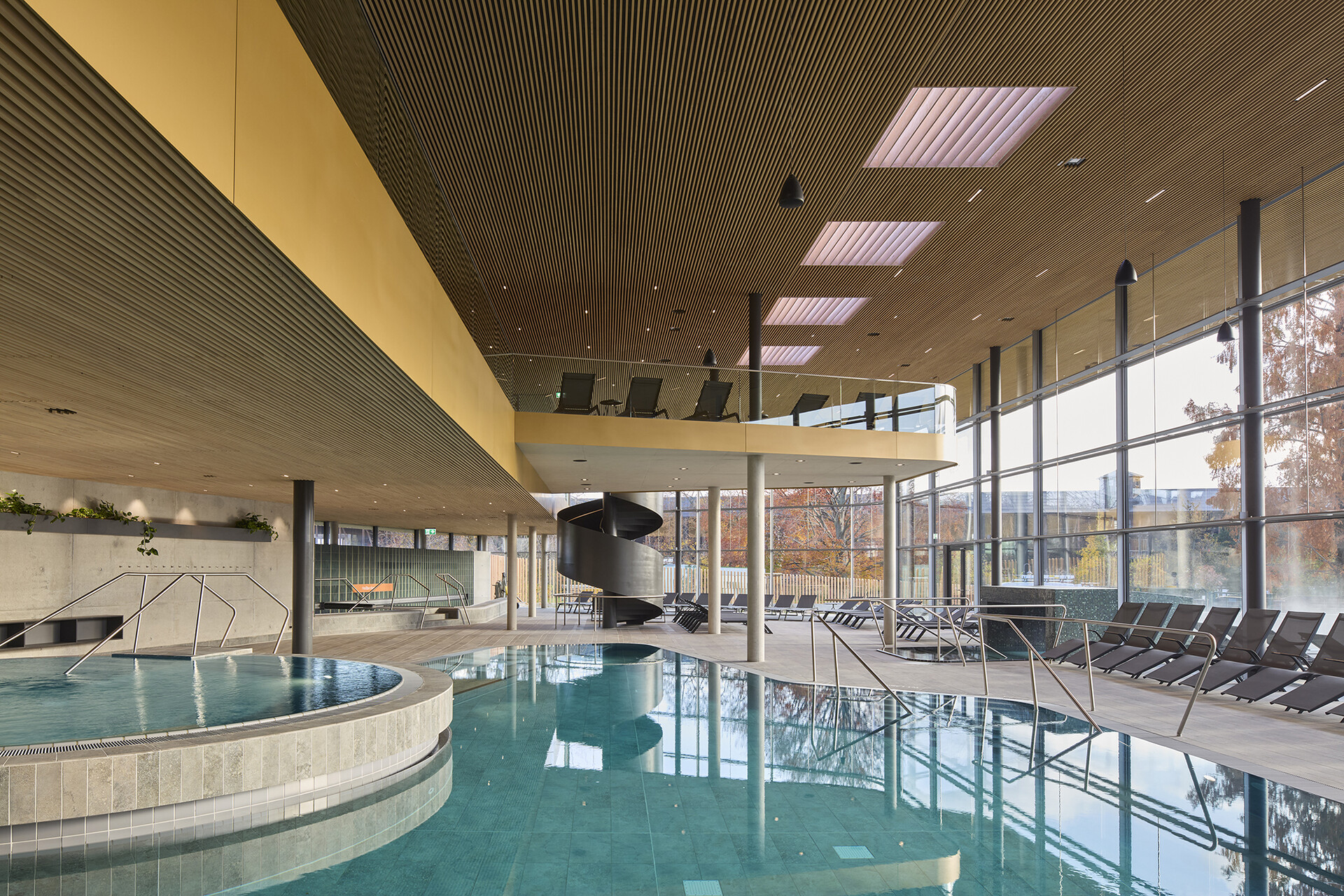
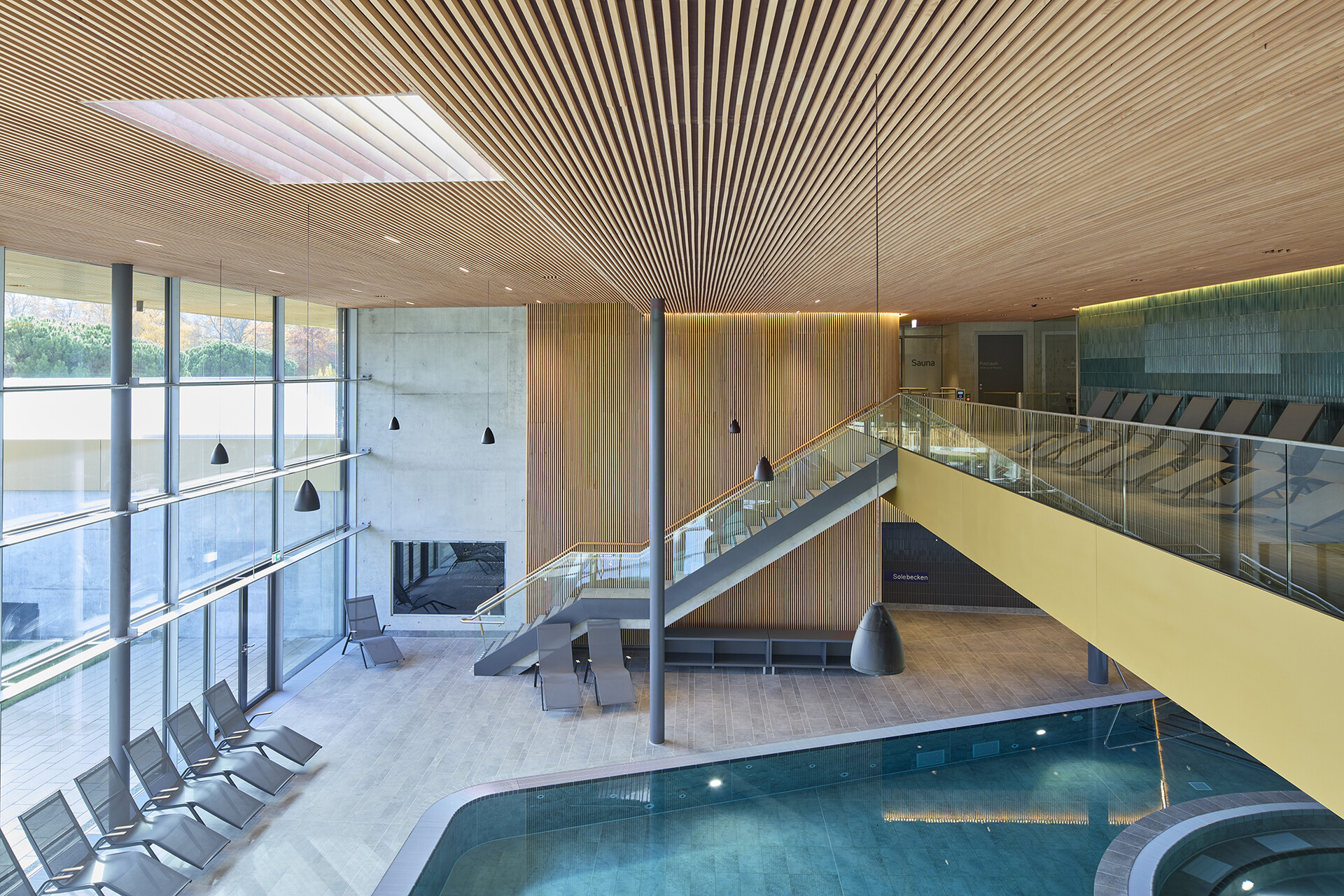
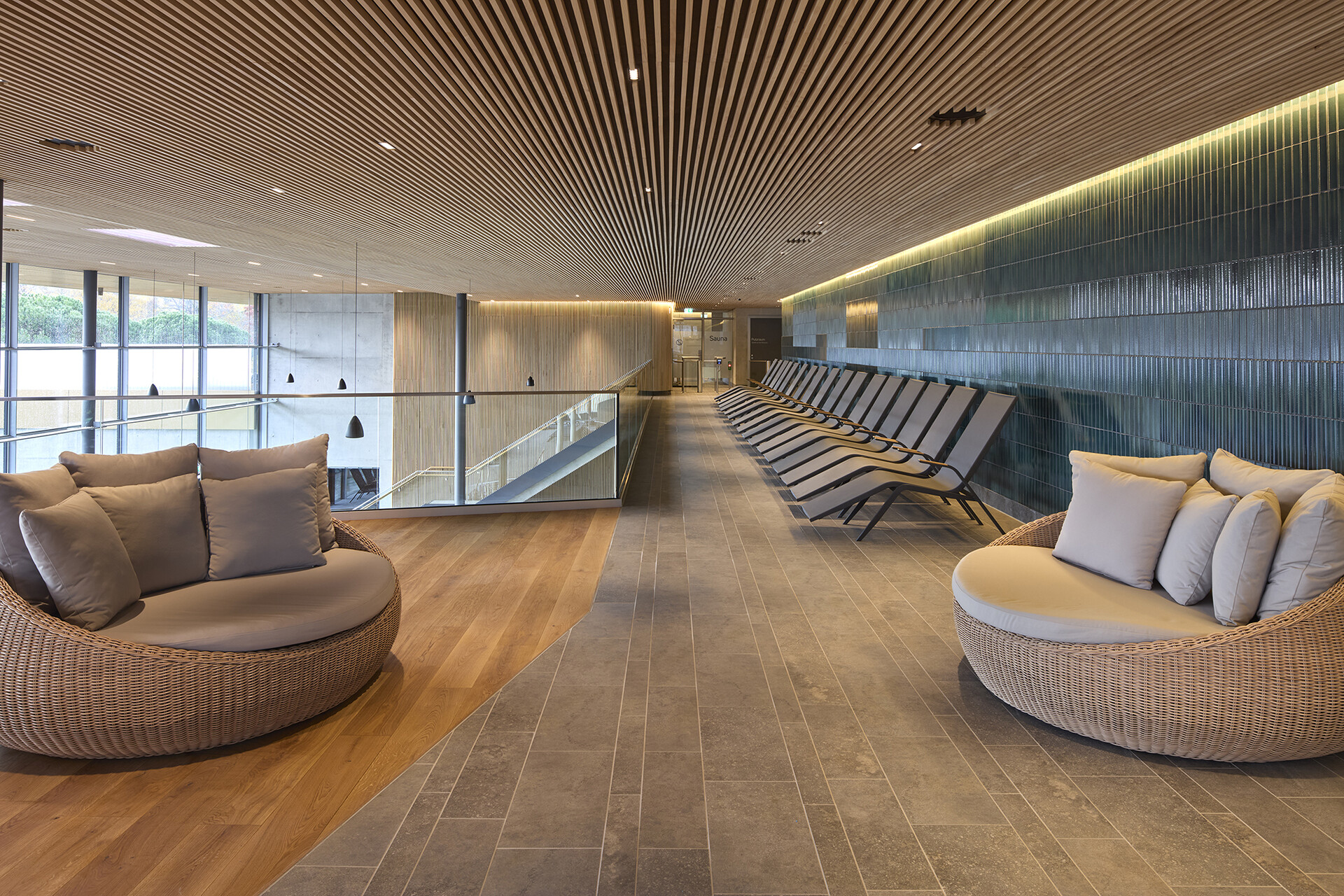
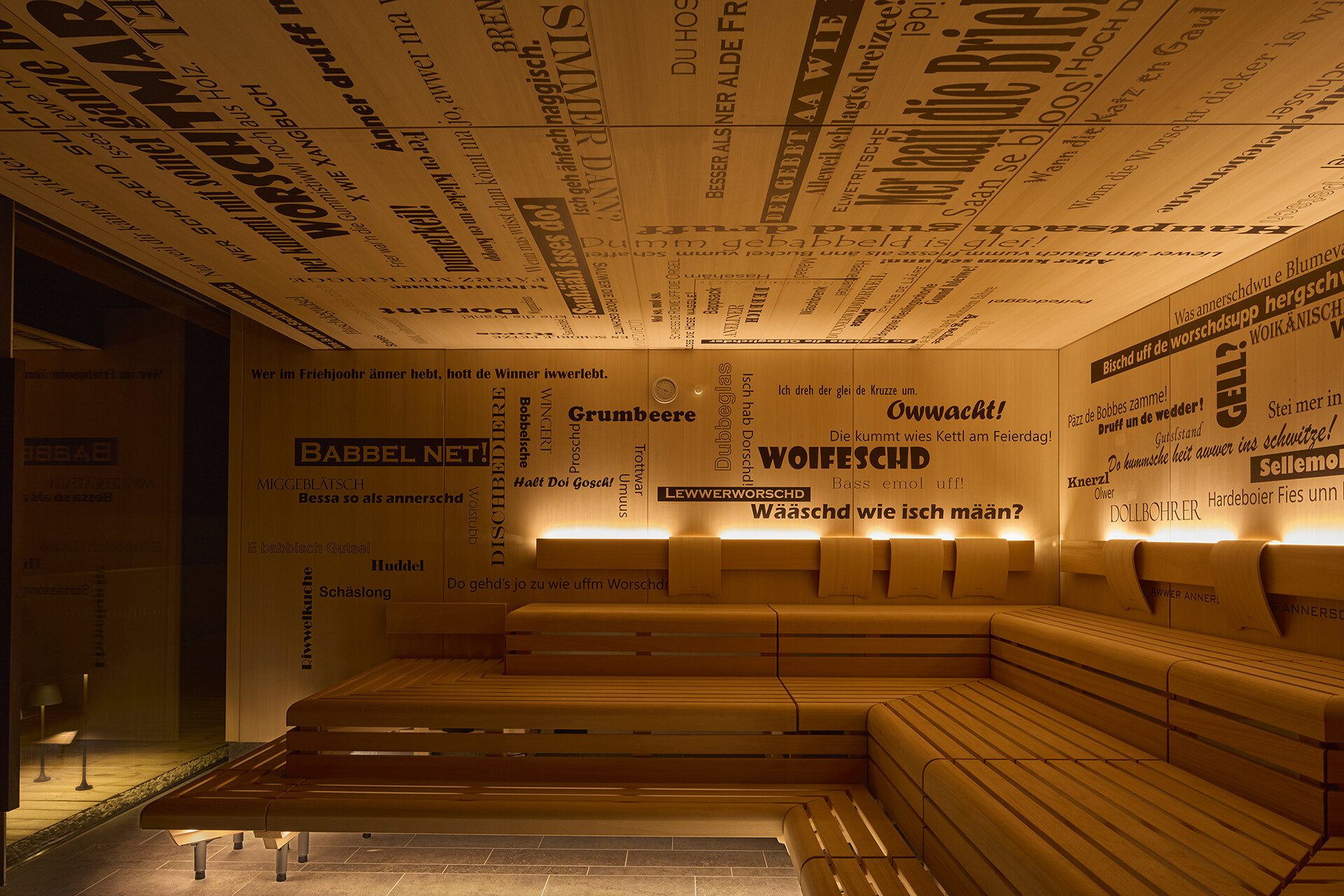
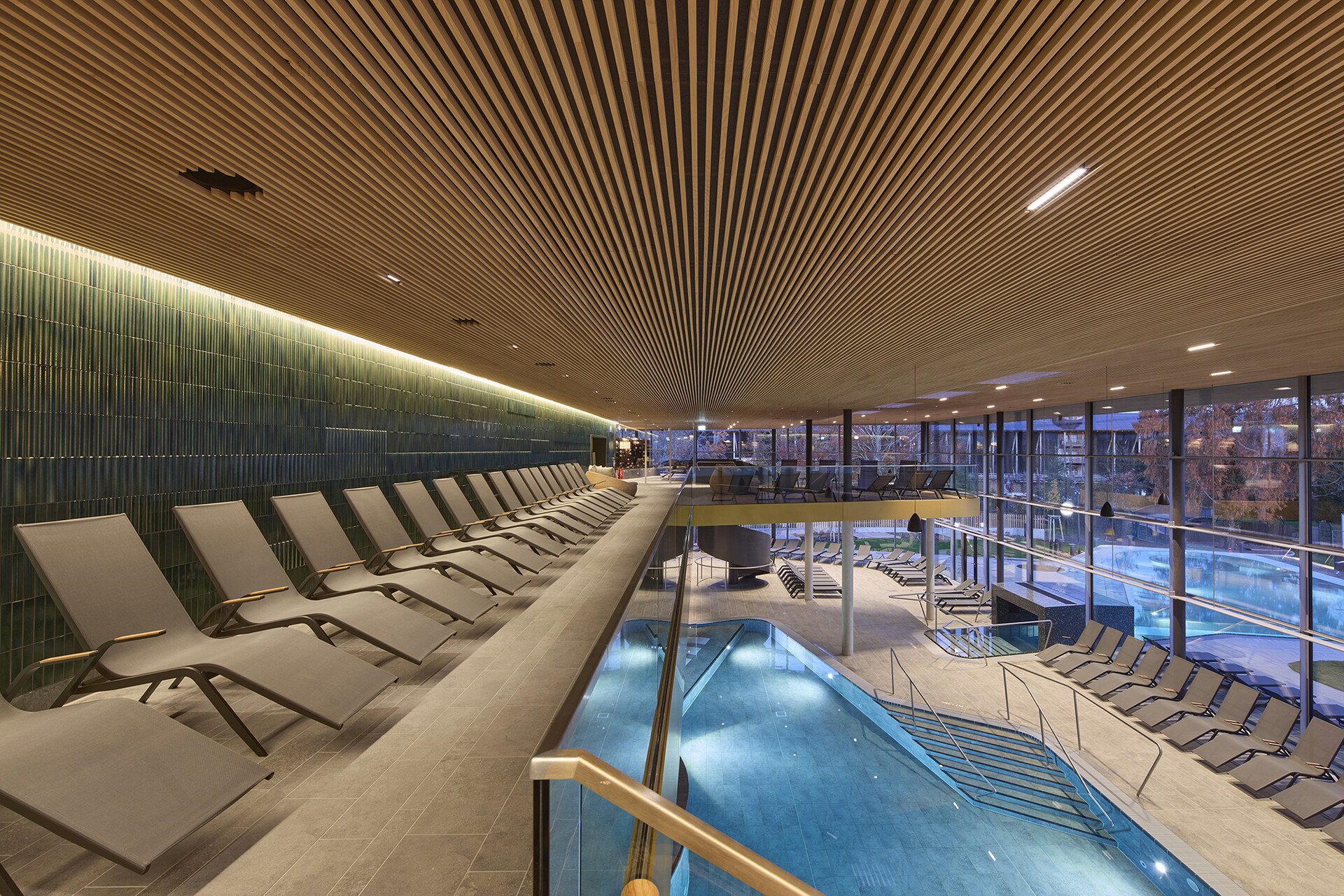
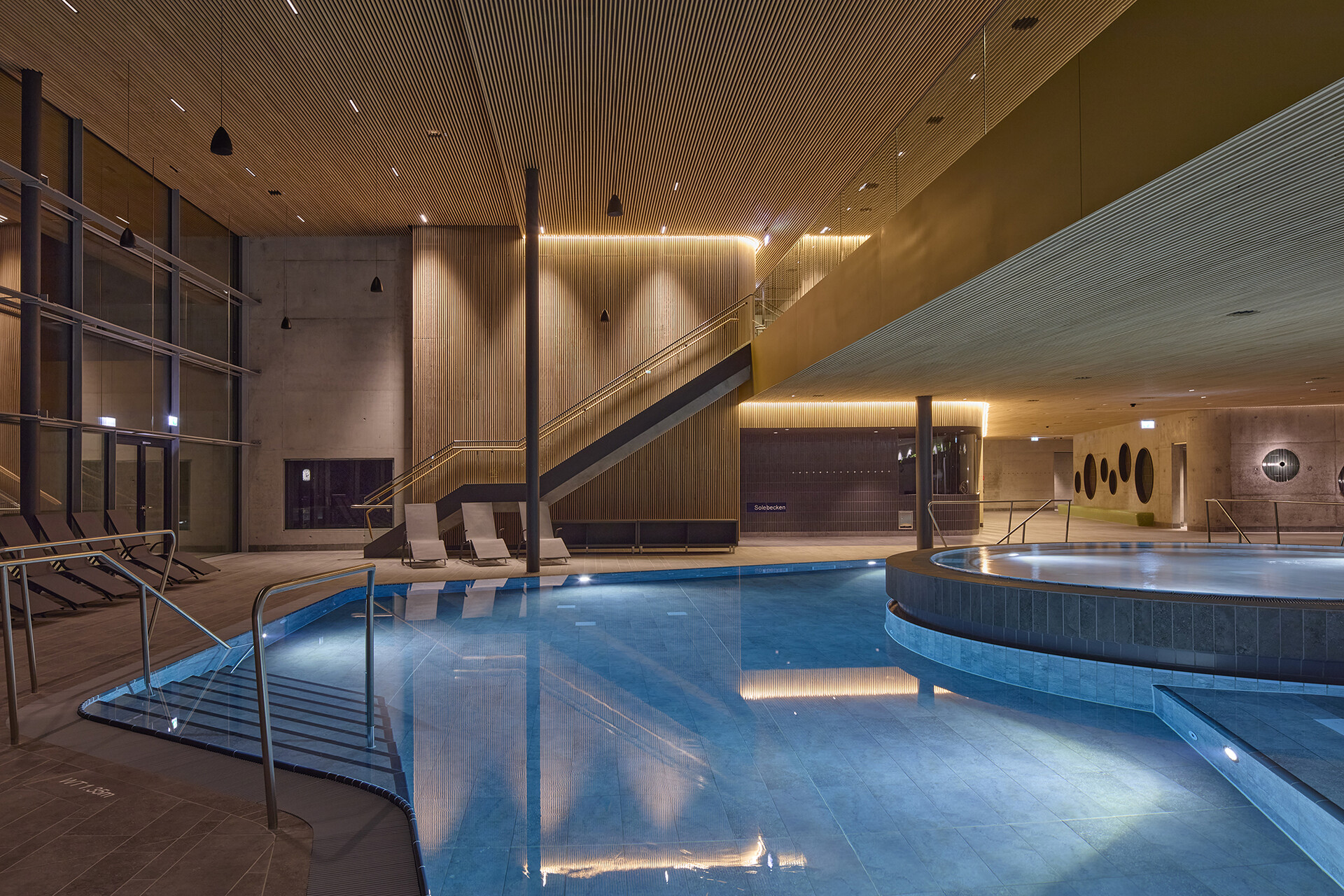
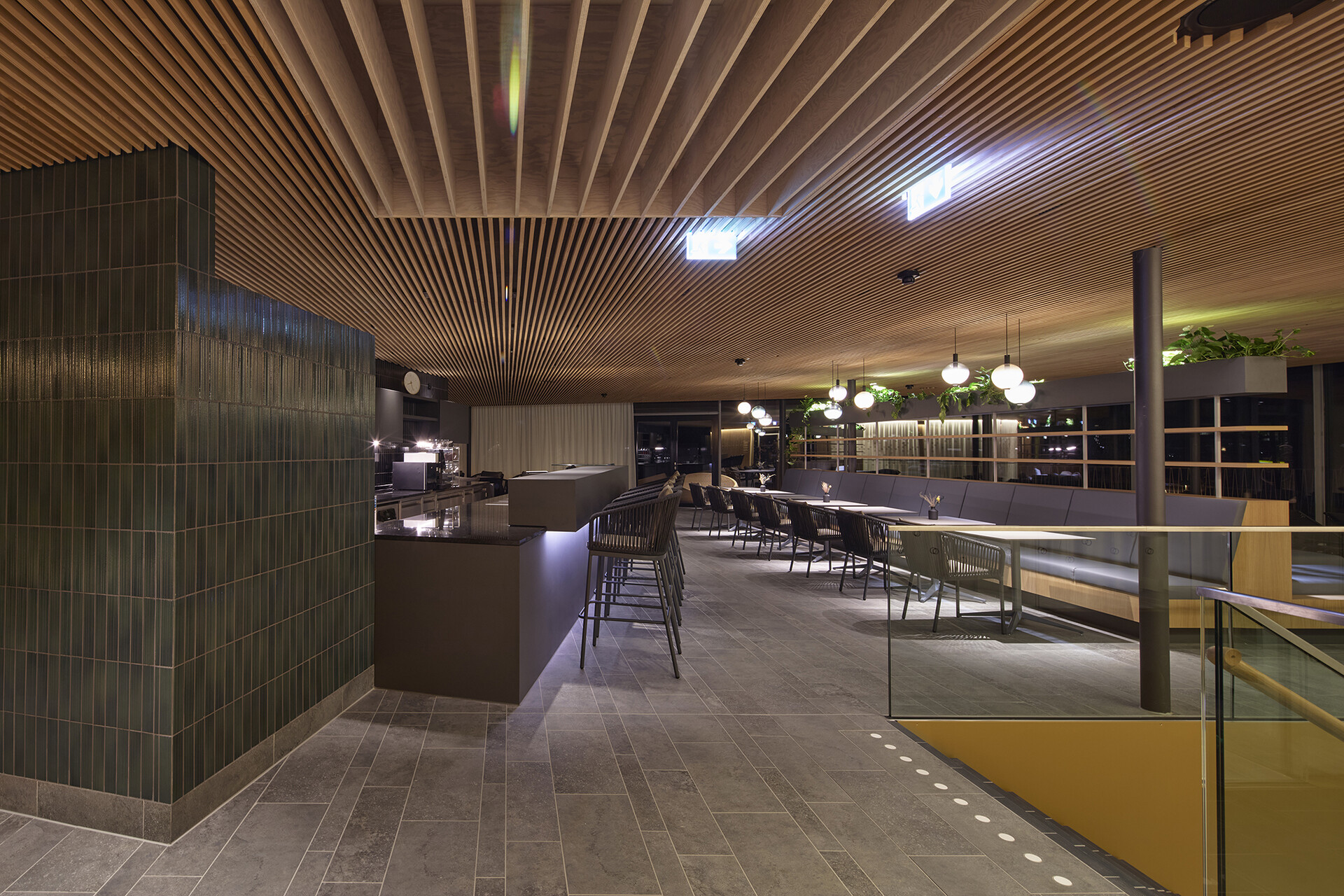
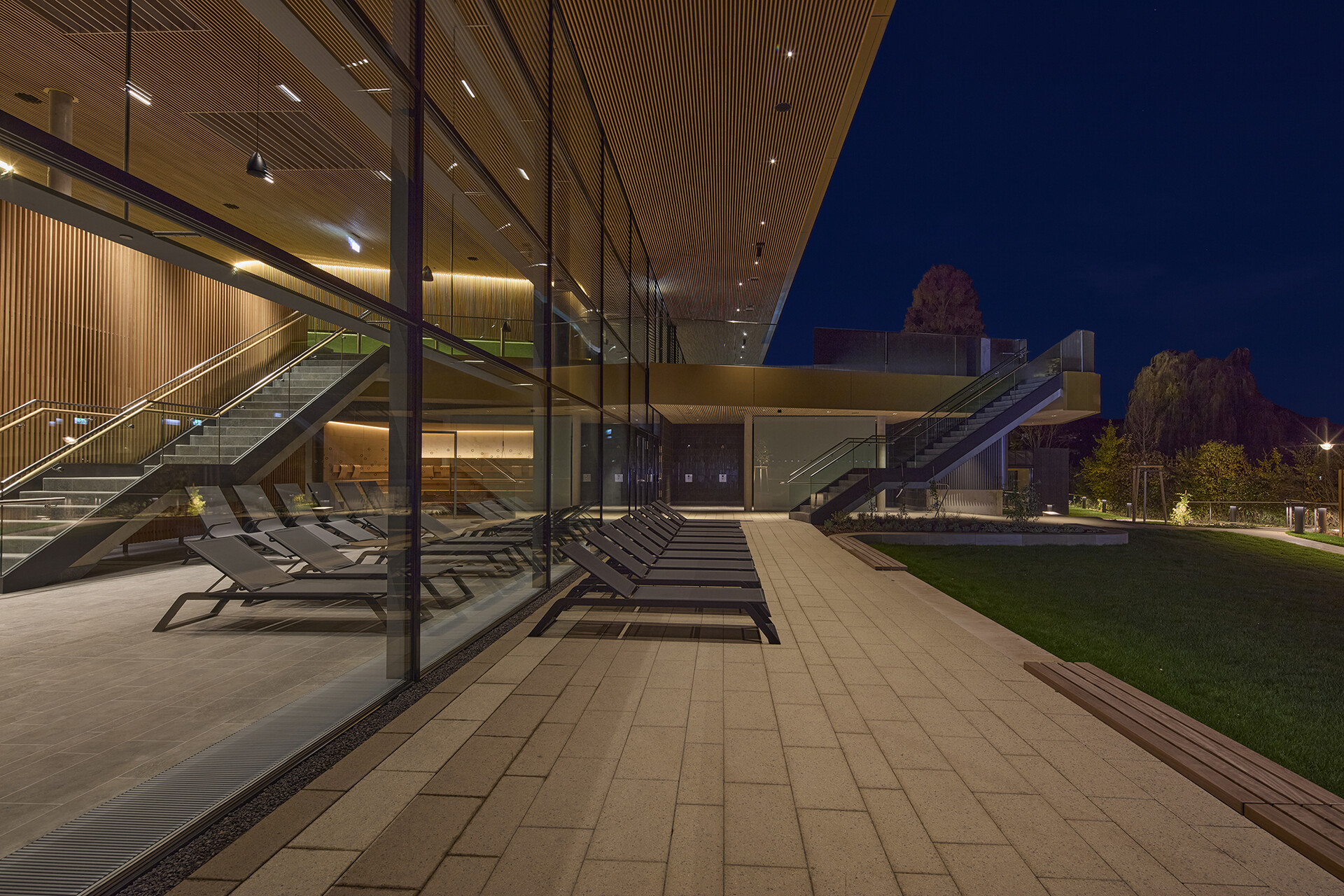
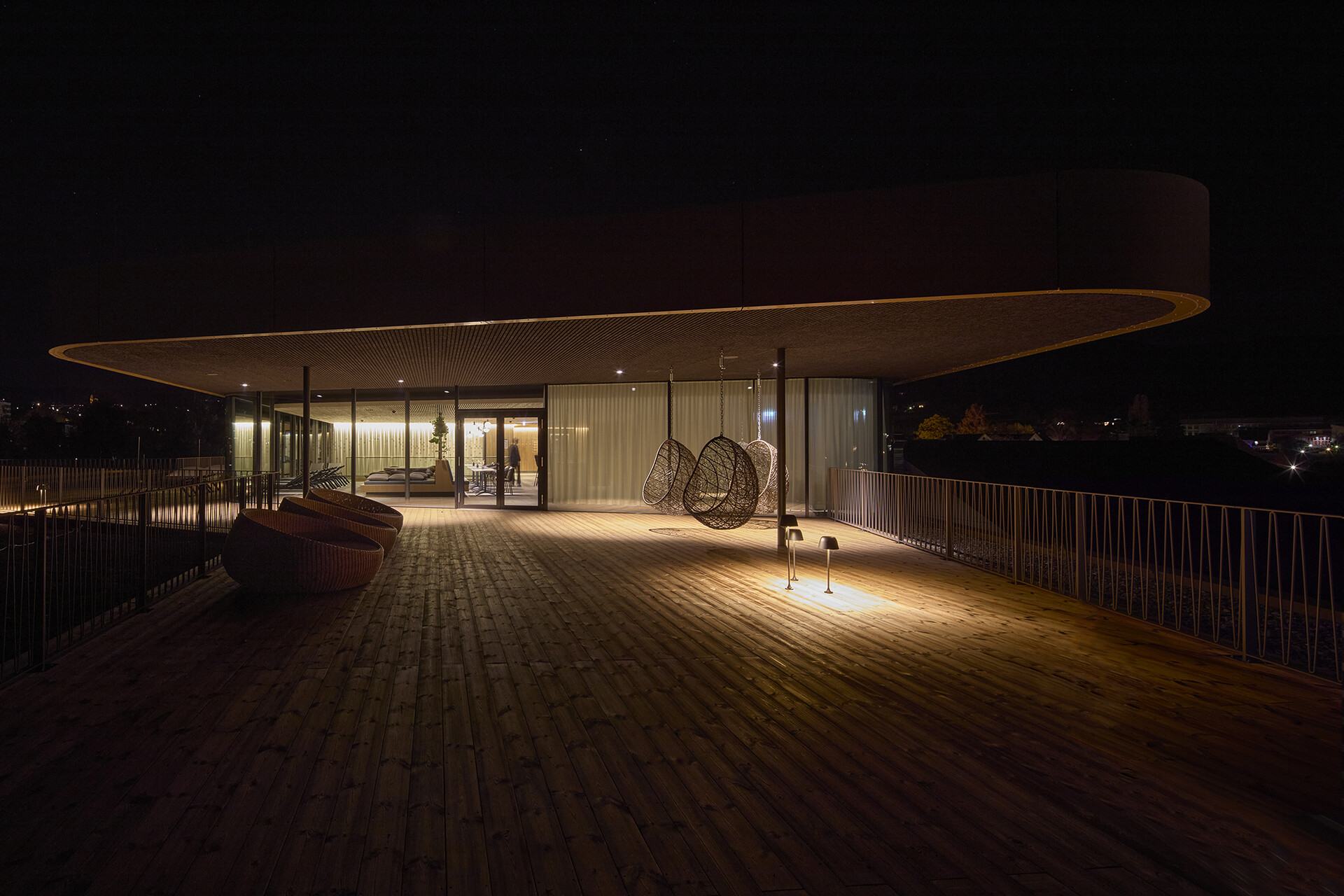
The thermal spa is characterised by curved forms that create flowing spatial sequences and enable intuitive orientation. The extension spans three levels: while the bathing facilities on the ground floor open to both interior and exterior spaces, the sauna landscape unfolds vertically across all storeys and offers a broad thematic variety. Each level is complemented by catering facilities with different atmospheres: a restaurant on the ground floor, a fireplace lounge on the first floor and generous relaxation areas on the second floor with views of the park and the town. All levels also extend outdoors. A sauna garden with outdoor sauna, an exterior area connected to the thermal hall and a roof terrace expand the available facilities and link interior and exterior spaces.
Materiality, light and atmosphere
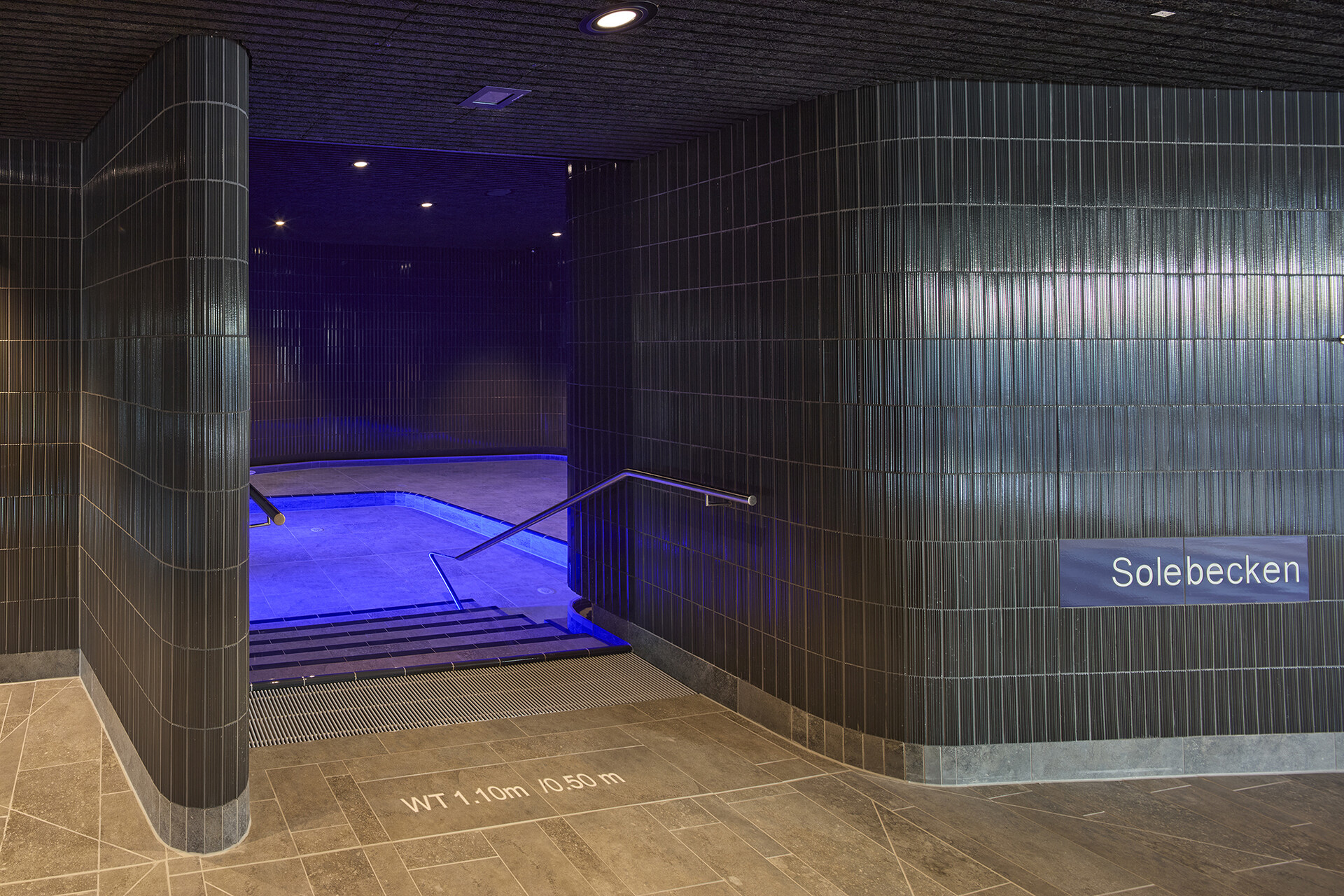
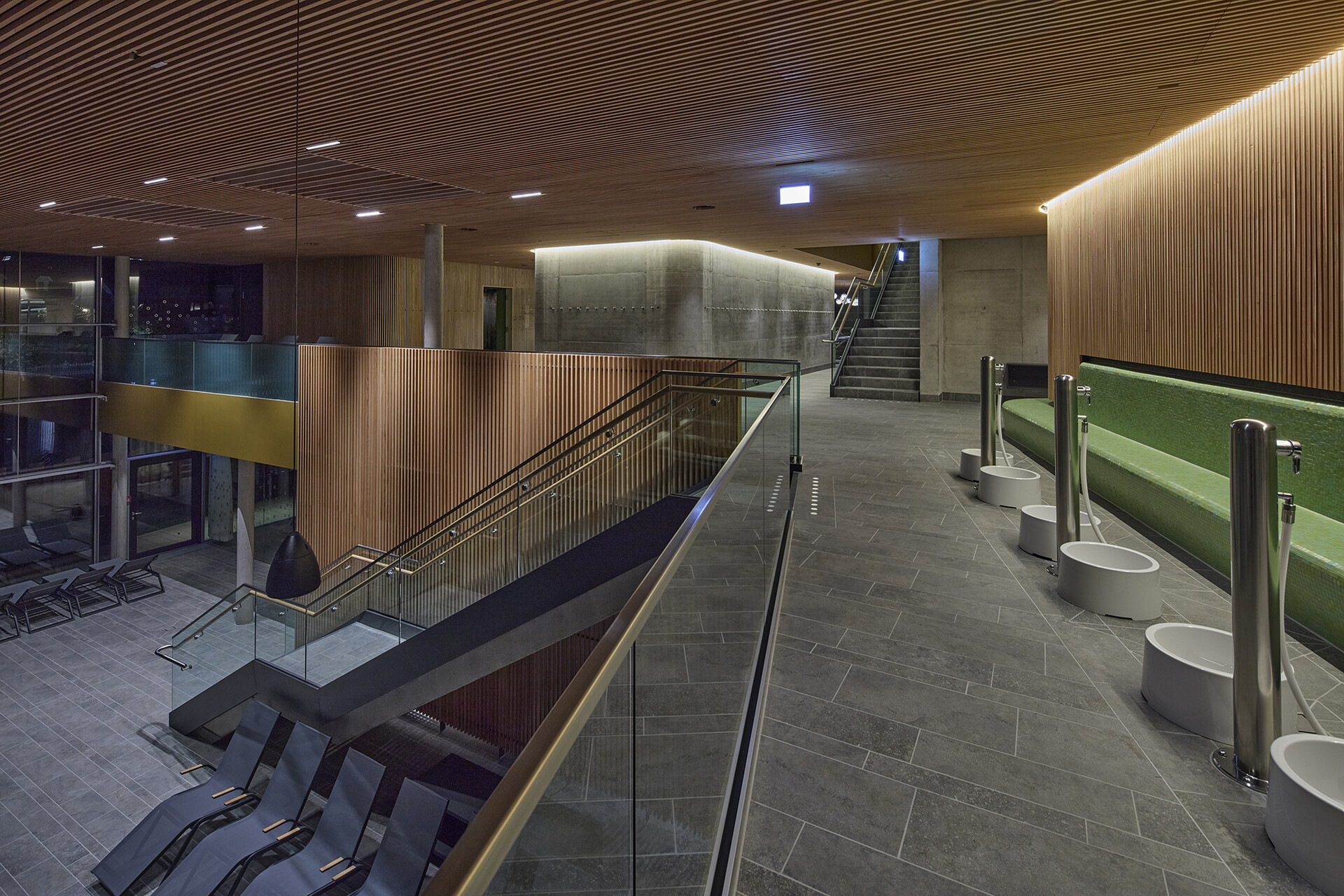
The design of the thermal spa is deliberately calmer and more classic than the leisure pool, aiming to create a timeless and highly durable atmosphere. Warm materials such as wooden slats, porcelain stoneware and ceramic finishes in muted shades define the interiors. Even the pools are tiled in grey – a conscious decision reinforcing the tranquil, refined character of the complex. Lighting design forms an integral part of the architectural concept: general lighting is restrained, while precisely positioned light lines highlight selected architectural elements and support spatial orientation. The new external cladding references a key regional motif. Its colouring is inspired by the golden hue of a matured Riesling, translating the local wine tradition into an architectural language. Continuous façade bands tie the thermal spa area together while clearly highlighting the interplay between existing structures and the new extension.
Building during ongoing operations
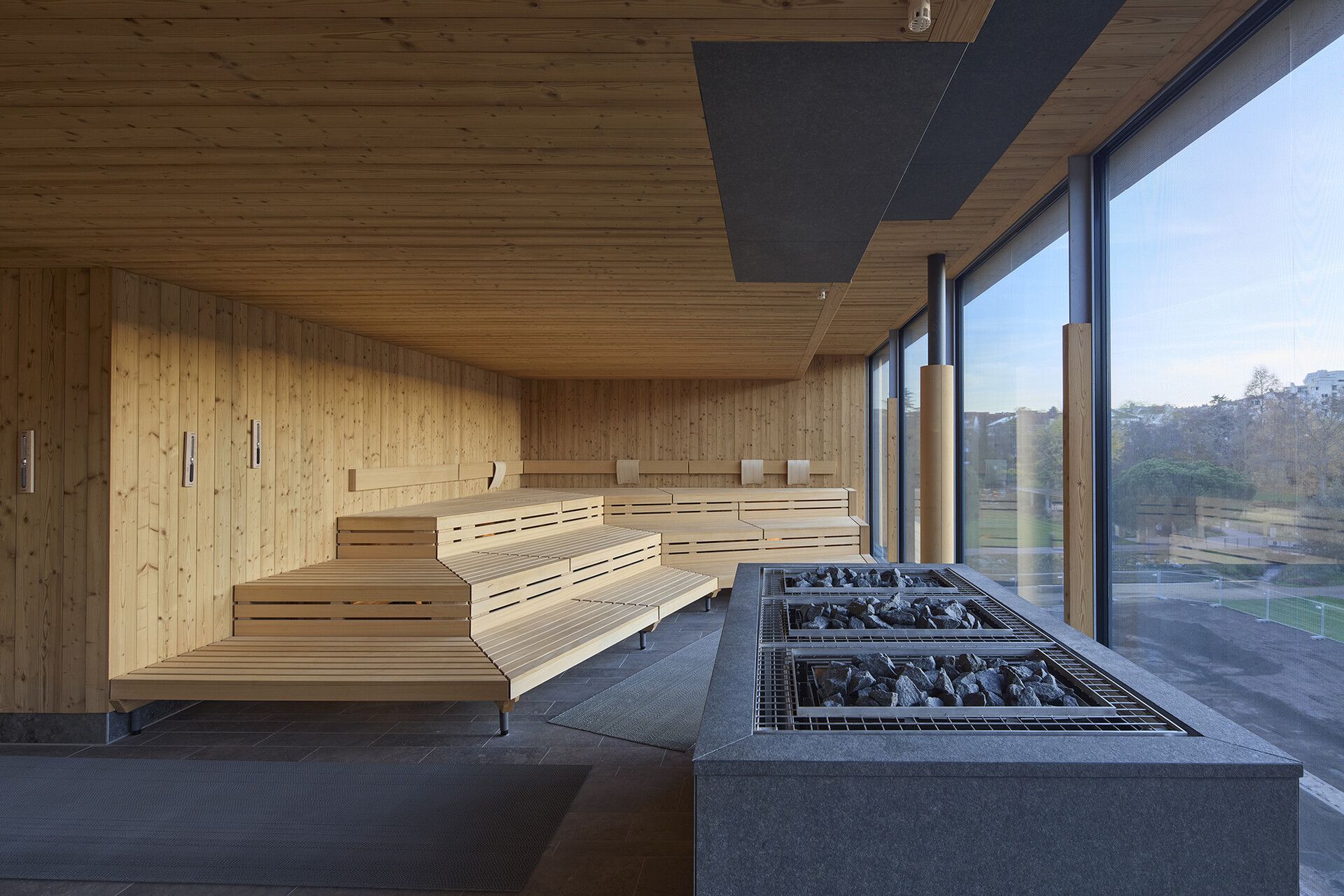
The expansion of the Salinarium was carried out while the pools remained open, requiring great precision and a respectful approach to the existing fabric. The structural separation between old and new is intentionally discernible, allowing the familiar to be preserved while giving the new its own identity. Existing façades in the transition zones were refurbished and integrated into the overall concept. The extension is based on durable construction and a reduced, robust range of materials. Timber, exposed concrete and ceramic finishes define the interiors, while generous floor-to-ceiling glazing provides daylight and allows the use of solar gains.
Sustainability through preservation and transformation
The transformation of the Salinarium demonstrates the potential of building on what already exists. Preserving the existing structures was, among other things, a deliberate cultural and ecological decision: existing buildings form part of a city’s collective memory and store significant amounts of embodied energy. Their preservation conserves resources, reduces waste and lowers environmental impact. The leisure pool was therefore not replaced but intentionally developed further. The existing structure now forms the backbone of a new thermal spa that expands the bathing and wellness offer and creates a place for relaxation, health and social interaction.
Energy and building concept
A high-performance building envelope with optimised insulation and airtight detailing significantly reduces heat loss and enhances energy efficiency compared to the existing building. Ventilation systems with high heat recovery, demand-controlled operation and pool covers help keep operational energy consumption low. Heat is supplied via district heating, ensuring a stable and low-emission energy source. The technical infrastructure also follows sustainable principles. Separate pool water circuits, heat recovery from process water, a stagnation-free drinking water system and central building management ensure efficiency, hygiene and long-term usability. Photovoltaic panels on the façade and roof generate part of the required electricity, while extensive green roofs improve rainwater retention, microclimate and roof durability.
Durability and future viability
The Salinarium demonstrates that sustainable architecture begins with the continued development of existing buildings. Expanding the leisure pool with a thermal spa creates a place that remains familiar while offering new, contemporary experiences. The project thus combines continuity with modernity and ensures long-term ecological and social sustainability.